Dr Cait Newport
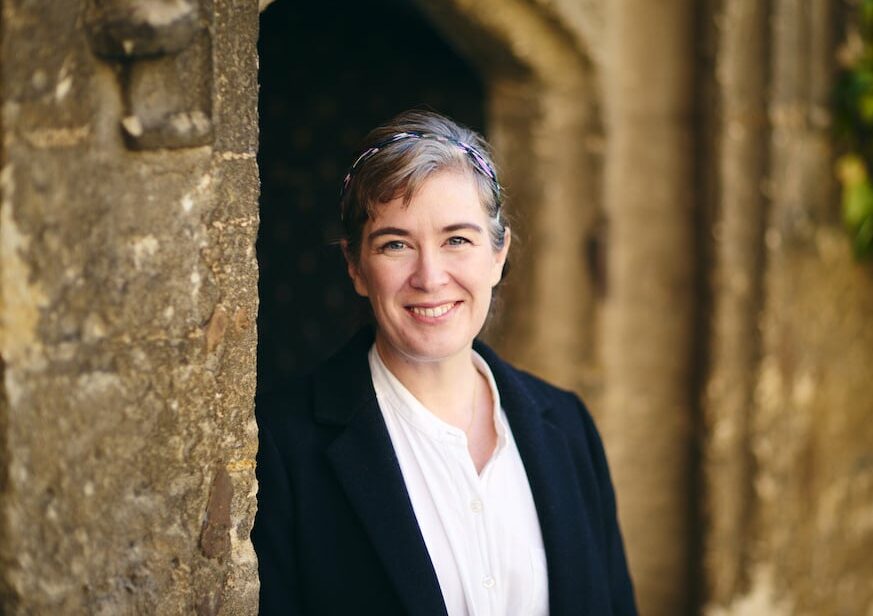
I am a Senior Research Fellow at the University of Oxford, where I lead the Animal Perception and Cognition Group. My research focuses on how animals use visual information to guide behaviour in complex, dynamic, and unpredictable environments. I am particularly interested in how animals integrate multiple—and sometimes conflicting—sensory inputs, and the decision-making strategies they use under uncertainty.
I studied Biology at Dalhousie University in Canada, and completed my PhD in the Department of Biomedical Sciences at The University of Queensland, Australia. My doctoral research explored the decision rules fish learn in psychophysical tests, as well as their capacity for complex pattern recognition and view-invariant object recognition.
Following my PhD, I was awarded a Marie Skłodowska-Curie Research Fellowship and joined the University of Oxford in 2015. During this fellowship (2015–2020), I investigated active vision in fish, focusing on how they use visual cues during navigation. From 2020 to 2023, I held a Leverhulme Trust Early Career Fellowship, where I began exploring how changes in underwater visibility affect visual perception and cue detection during navigation.
I was a Lecturer at Worcester College from 2022 to 2024. In 2023, I was awarded an Eric and Wendy Schmidt AI in Science Fellowship (2023–2025), through which I am developing tools for 3D path and terrain reconstruction in underwater environments to advance research on fish navigation in the wild. I am currently a Co-Investigator on a BBSRC Standard Grant that will explore what visual features birds attend to while navigating.
I was recently awarded a Royal Society University Research Fellowship, which will commence in 2026. This project will use both lab-based behavioural experiments and field-based observational studies to investigate the strategies fish use to navigate under changing visibility conditions. We will be using techniques from the field of computer vision, machine learning, and reinforcement learning to analyse animal movements, explore decision strategies, and identify navigational guidance rules for dynamic visual environments. I will be building a multidisciplinary team, so if you’re interested in joining us, especially if you have skills in machine learning, computer vision, or 3D simulation, please get in touch.
 Animal Perception and Cognition Group